Recipe cost gaps: what a flat 10% can miss
Recipe cost and actual spending do not match? Check the small costs behind the gap before adding a flat 10% to every dish.
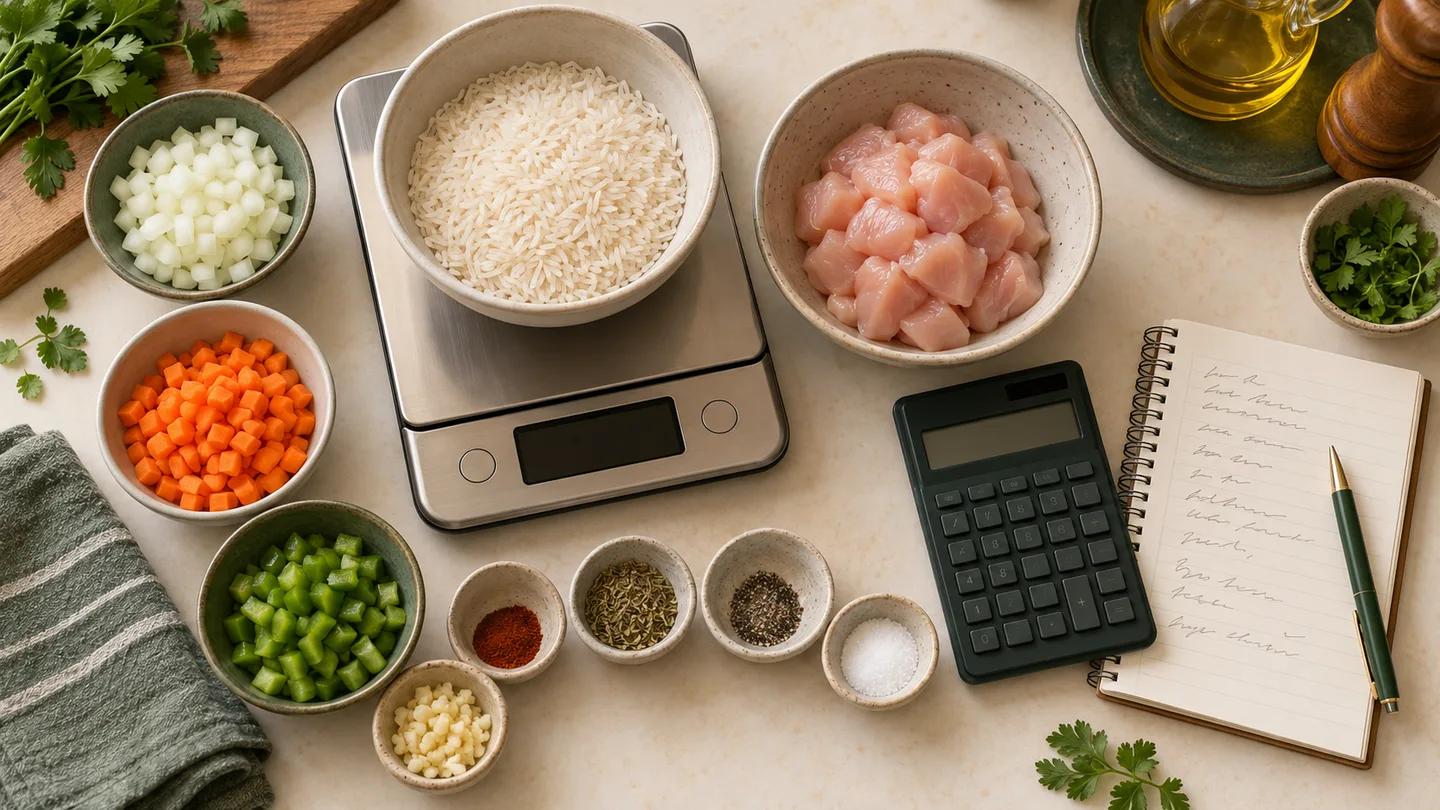
The recipe says one plate costs RM 3.80. The purchases say otherwise. The gap is not a mystery, and the accountant is not being difficult either.
The leak is made of small things. Oil for wiping the counter. Salt. Garnish. Sauce poured in a hurry. The lemon wedge. The bread basket nobody costed. The scoop that became slightly heavier and was never written down.
These have a name
The hospitality trade calls the sum of these the Q factor — the extras required to produce and serve a menu item, extras that never reach the ingredient list. Trade sources put the total somewhere in the region of five to ten percent of food cost, and the trade sources disagree with each other.
The disagreement is the useful part. If honest sources cannot agree on one number, then a fixed percentage applied to every dish is not costing. That is guessing with a decimal point.
Why the flat 10 percent is a bad habit
Because the same 10 percent is wrong in both directions at once.
On a menu with heavy garnish, free-flowing sauces and generous portions, 10 percent is not enough. Money keeps draining, and the leaking dish stays nameless.
On a simple menu — fried rice, a drink, a plate of greens — 10 percent is generous. The price gets inflated, and the dish now reads as more profitable than the truth. If the dish was ever a candidate for removal from the menu, the dish is being kept for the wrong reason.
And the average is the worst case of all, because a flat percentage never names the dish carrying the loss. The only number on record is the total — and the total is exactly the number that cannot be acted on.
What to do instead, in order
One: add the small items as real lines
Stop hiding the small items. Oil, salt, spices, sauces, garnish, disposables — each one goes into the recipe as its own row, with its own pack cost.
The work turns out much lighter than the description sounds. Oil comes in one container, with the rough cost known from the receipt — that is one row, entered once, and reused across every dish that uses oil. Whatever gets lost in spreadsheet tidiness comes back the moment the spend becomes visible.
Two: keep an allowance only for what is genuinely invisible
After the first step, some things remain invisible. Those are the things an allowance exists for.
Portion drift: a "150 gram" scoop quietly weighing 170 after a few hundred plates. Overproduction at closing that heads straight for the bin. Trim loss the recipe never records. Nothing in this list can be measured at the recipe level, so estimating is legitimate.
Stay honest about the estimating. Keep the allowance small enough that a wrong estimate is noticeable.
Three: measure instead of guess, once possible
This is the step most kitchens never take — and the one that matters most.
Theoretical food cost is what the recipes say should have been spent, based on what sold. Actual food cost is what was genuinely spent, once purchases and stock counts land. The difference between the two is the variance.
Read the variance and the number speaks specifically: over-portioning, waste, spoilage, or a recipe whose numbers no longer match supplier charges. Which of those four becomes clear once the variance is traced to a position.
Four: replace the guess with the measurement
This is where the allowance stops being an allowance.
Once there is a real variance, the variance replaces the flat 10 percent with an actual number — one measured instead of inherited. If the variance comes out at four percent, the prices were ten percent light. At fourteen, the pricing has more room than expected.
Either way, the number is now known. Before this, the only asset was a number that felt reasonable.
Why the arithmetic is impossible by hand
Step three is where most owners give up, and the reason is arithmetic rather than attitude.
A menu of maybe forty dishes, each with maybe eight ingredients, each ingredient bought in a different pack size with a different unit. Every dish would need multiplying by every portion sold, every day, then comparing against purchases. That is not a spreadsheet job. Nobody sustains that arithmetic by hand.
Where Qsolve fits
This is the exact problem recipe costing inside a POS was built to remove, and the mechanics deserve a precise description.
When an item is rung up, the ingredients behind the item come down — not because someone remembered to log the sale, but because the sale triggered the decrement. Theoretical cost therefore runs continuously and automatically: portions sold multiplied by recipe cost, computed with nobody's spreadsheet in the loop.
That gives one side of the variance for free, and accurately. Purchases and stock counts fill in the other side, and the gap appears on its own.
The kitchen benefit is separate but related: the same mechanism flags what is running low, so the waste that used to be a feeling at the end of the month becomes visible as stock movement.
So where does the 10 percent go?
Start by splitting the allowance in half. The half that can be named goes into the recipe as real lines. Only the half that genuinely cannot be seen stays as allowance.
Then run a month and look at the variance. The variance names which half was too big — and that half is rarely the half anyone expects.
Read next
Variance usually shows up as material leaving the store with nothing recorded, and that is a workflow problem more than a costing one: the five S in a working kitchen. New cooks are where portion standards drift first: what a new cook needs on day one. Numbers before opinions: check the food cost variance across outlets.